Aluminum-Clad Wood Windows and doors for Luxury Homes in NYC — The Best of Both Materials

Limited-time 10% discount
on your first project

Trusted local window experts serving you since 2008
Aluminum-clad wood windows combine a real wood interior — warm, natural, customizable — with a durable aluminum exterior that requires no painting and withstands New York City's climate without compromise. The result is a window that looks and feels like wood from inside, performs like a modern system from outside, and is available in custom sizes and profiles for landmark buildings, luxury townhouses, and high-end residential renovations across Manhattan and Brooklyn.
- Real wood interior — oak, pine, meranti, and more
- Aluminum exterior — no painting, no warping, no rot
- LPC-compatible profiles for landmark buildings
- Custom sizes · Brooklyn showroom · Since 2008

Limited-time 10% discount
on your first project

Trusted local window experts serving you since 2008

What Is an Aluminum-Clad Wood Window?

An aluminum-clad wood window has a structural core made from solid wood — the same material used in traditional window construction for centuries — with a formed aluminum shell bonded to the exterior faces. The wood provides structural rigidity, natural insulation, and the warm interior finish that homeowners choose wood for. The aluminum cladding protects the wood from rain, humidity, UV exposure, and the freeze-thaw cycles that cause unclad wood windows to swell, crack, and require repainting every few years.
From the street, an aluminum-clad wood window presents an aluminum face — smooth, painted, and maintenance-free. From inside the home, the window looks and feels like wood: the sill, the reveals, and the interior face of the frame are all real timber, finished and stained to the owner's specification. This combination is why aluminum-clad wood is the material of choice for high-end residential projects where interior quality matters as much as exterior performance.

Why Aluminum-Clad Wood Is the Right Choice for NYC Luxury Homes

Profile and Dimensions

New York’s humid summers, cold winters, and frequent rain cycles are hard on unclad wood. Aluminum cladding eliminates the swelling, cracking, and paint failure that affect painted wood windows — with no compromise to the interior appearance.

Landmark Compatibility

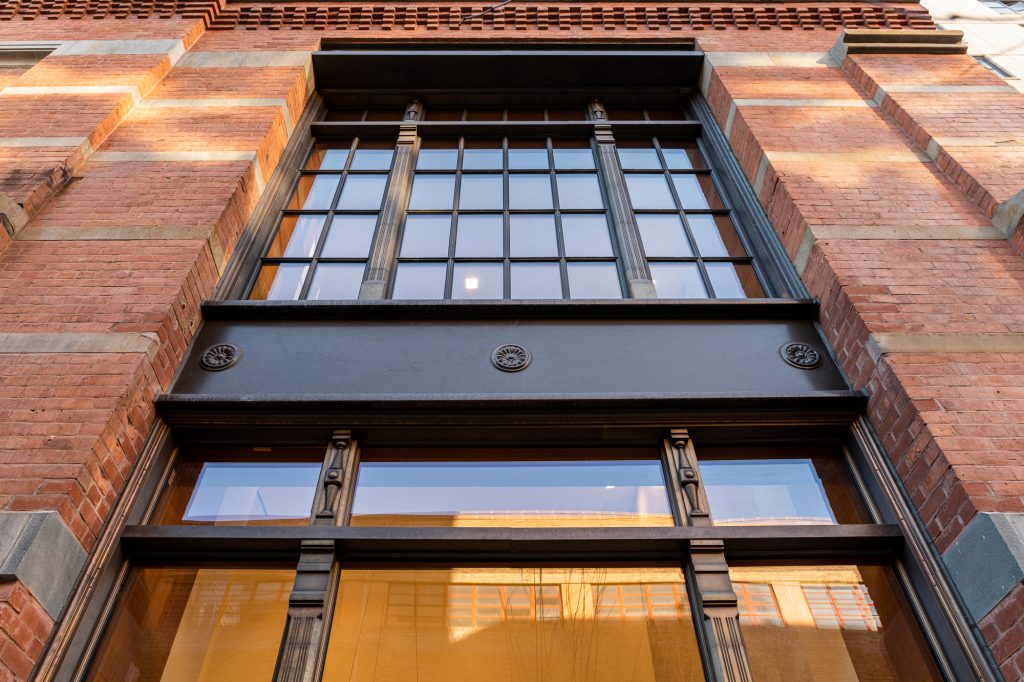
Aluminum-clad wood windows with slim exterior profiles are accepted by the LPC across many NYC historic districts. The exterior presents as painted wood — indistinguishable from the street — while meeting modern thermal standards.

Interior Quality that Aluminum Can’t Match

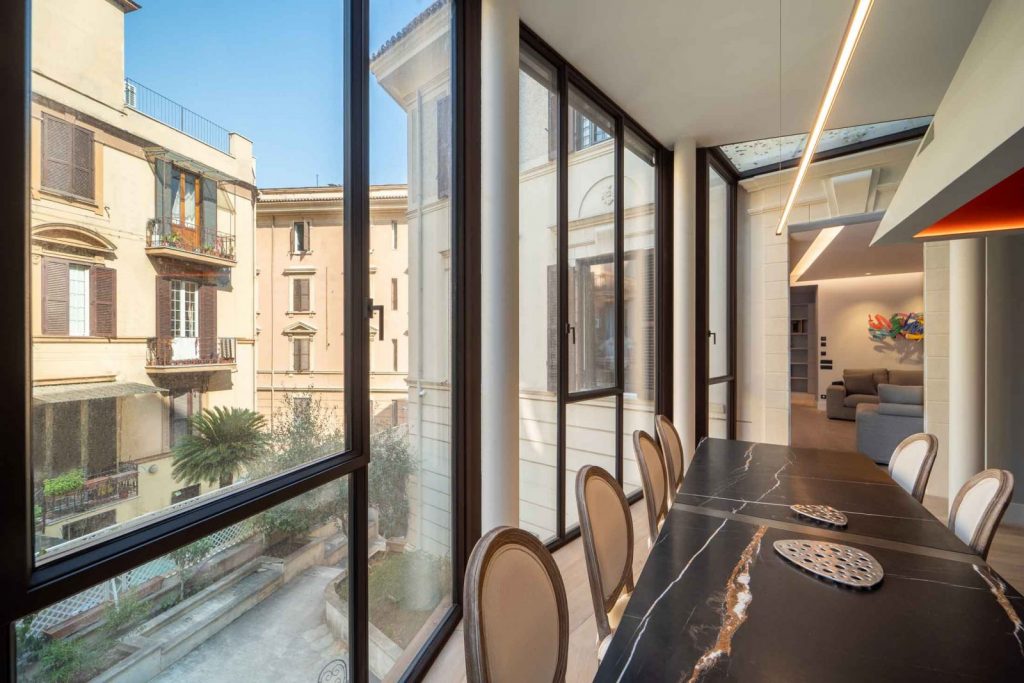
In a luxury brownstone or townhouse, the interior finish matters. Real wood reveals, sills, and frames — stained, painted, or left natural — create a quality of finish that no aluminum-only system can replicate.

Customization — Wood Species, Interior Finish, Exterior Color

Interior Wood Options

– Pine — traditional, paintable, cost-effective

– Oak — durable, prominent grain, stainable

– Meranti — stable, tight grain, popular for staining

– Ash — light color, straight grain, highly shock-resistant

– Custom species on request

Interior Finish Options

– Factory-primed (paint on site)

– Pre-painted in any RAL or custom color

– Factory-stained (clear or tinted)

– Natural oiled finish

– Custom stain matching available

Exterior Aluminum Finish

– Full RAL color range — powder coated

– Bronze, Copper, Aluminum

– Interior and exterior colors can differ

– Most popular: RAL 9010, 7016, 9005, 8022

Interior Finish Options

– Matte black, brushed brass, bronze

– Satin and polished stainless steel

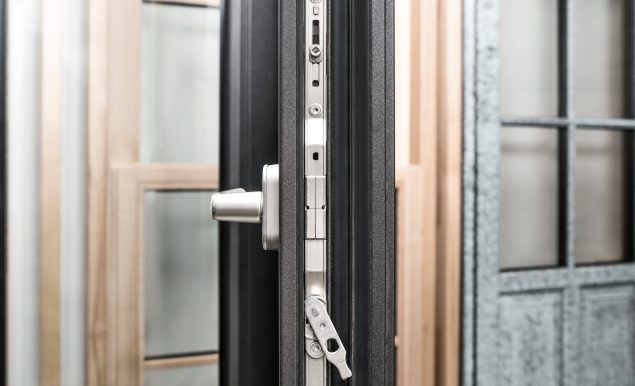
– Espagnolette (multi-point locking)

– European precision hardware brands

– Coordinated across windows and doors

Aluminum-Clad Wood vs Solid Wood vs Aluminum — How to Choose

Clad woodSolid woodAluminum
Interior appearancereal woodreal woodaluminum only
Exterior maintenancenone (aluminum)repainting every 4–7 yrsnone
Thermal performanceexcellent (wood + thermal break)goodexcellent (thermally broken)
LPC compatibilityaccepted in most districtsmost traditionalaccepted with slim profiles
Customization depthhighesthighmedium
Costpremiummid to premiummid
Best forluxury brownstones, townhouses, landmark buildings where interior quality mattershighest-end restorationslarger projects, contemporary aesthetic

Not sure aluminum is right? See our Wood Windows page and Steel Windows for NYC page.
Where Aluminum-Clad Wood Windows Work Best

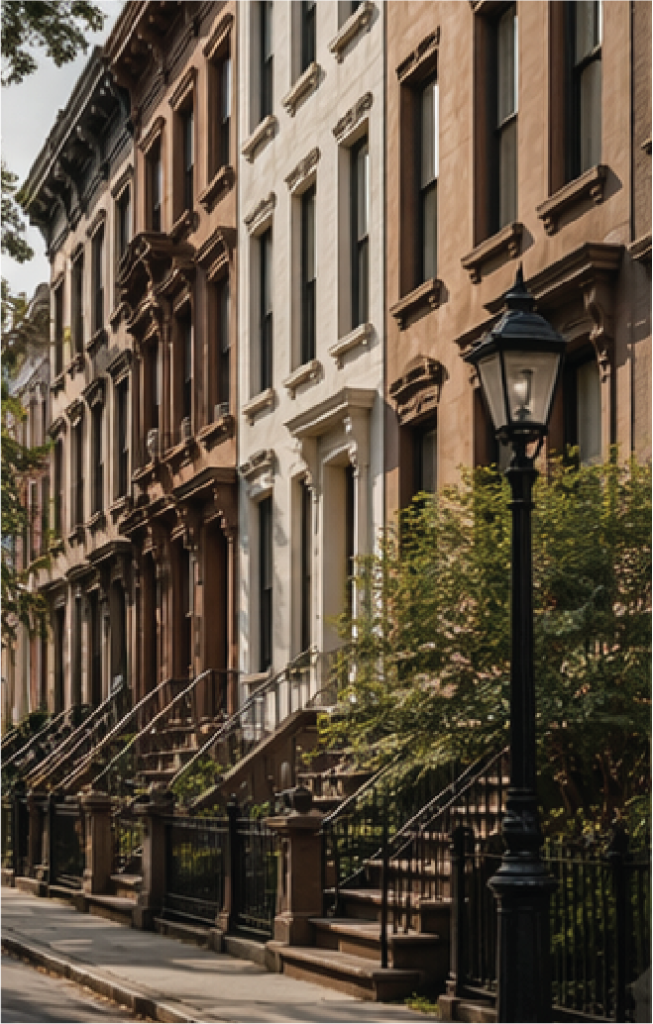
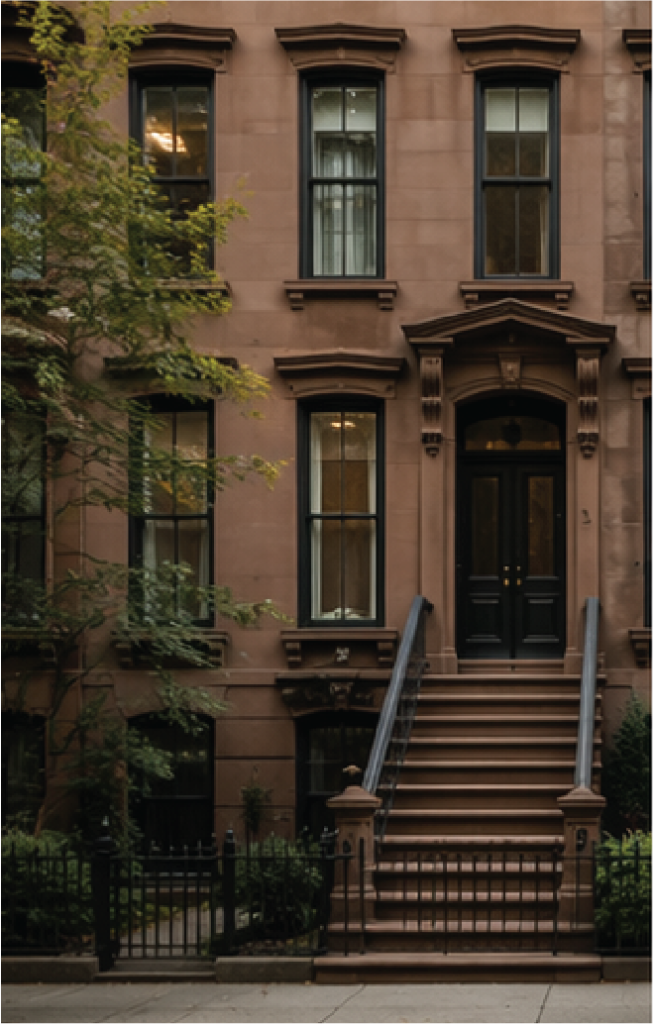
brownstone rowhouse
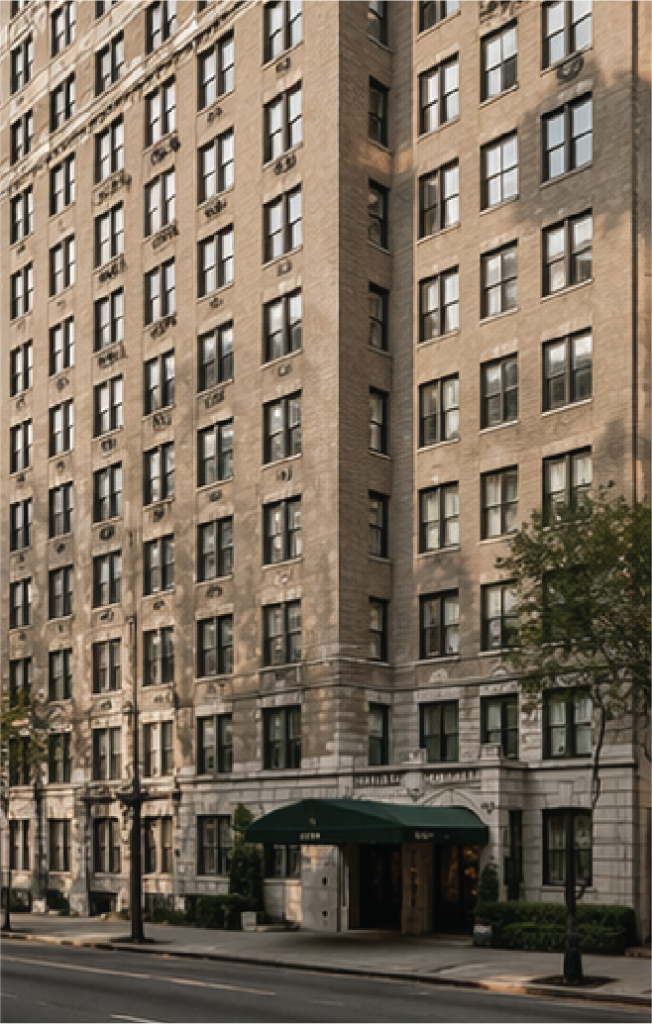
Pre-war co-op or apartment building
townhouse
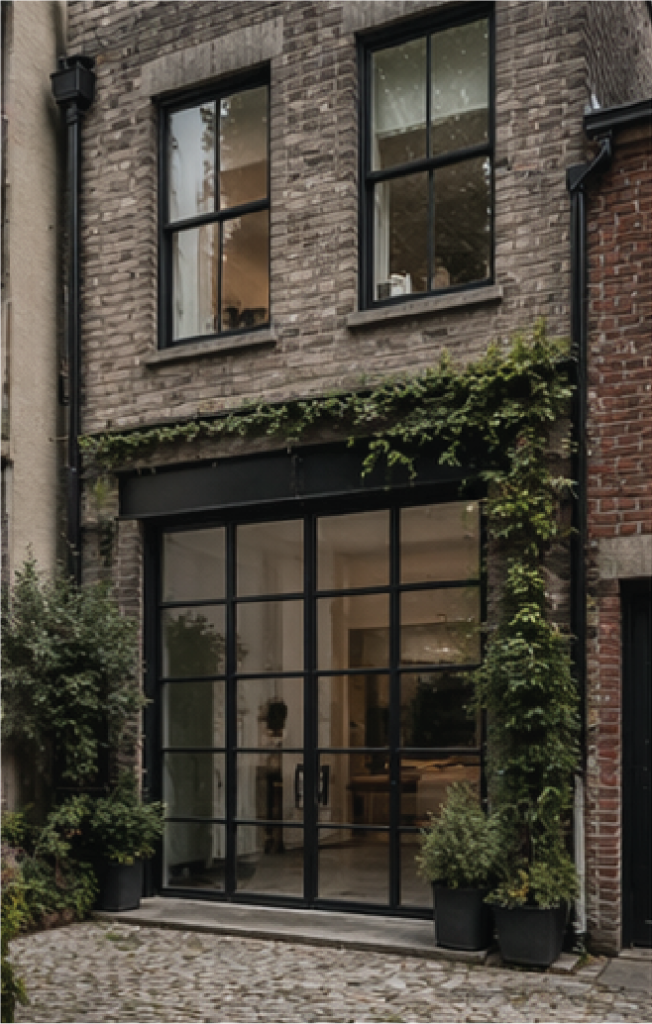
carriage house or mews building

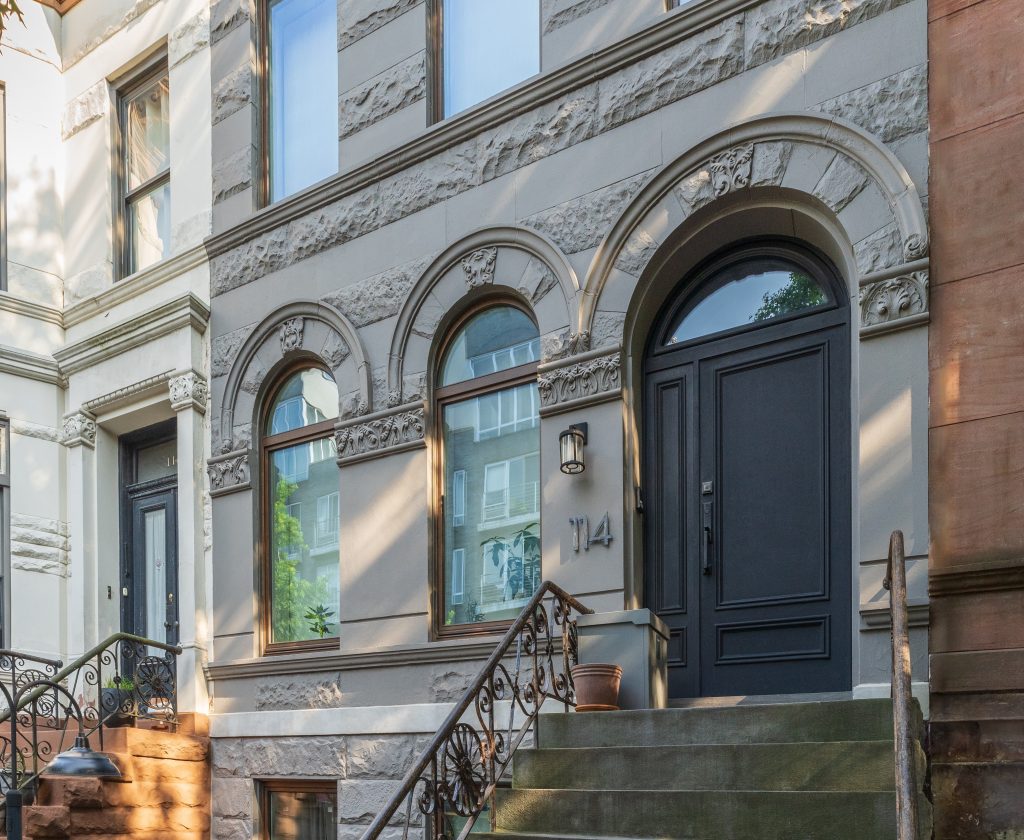
Landmarked brownstone or rowhouse renovation — Aluminum-clad wood with slim exterior profiles and matching muntin geometry is the ideal solution for pre-war buildings in LPC districts. Passes review, requires no exterior repainting, looks correct from the street.

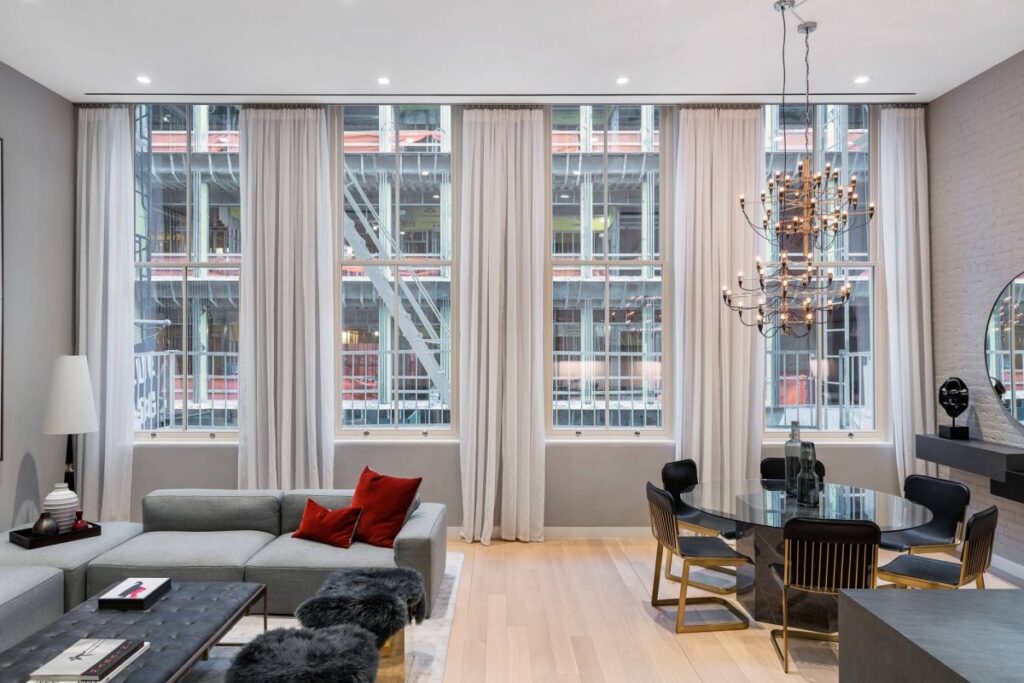
High-end townhouse gut renovation — Full-building replacement in a single material for visual consistency. Custom wood species and interior stain matched to the interior design. Exterior color coordinated with facade restoration work.

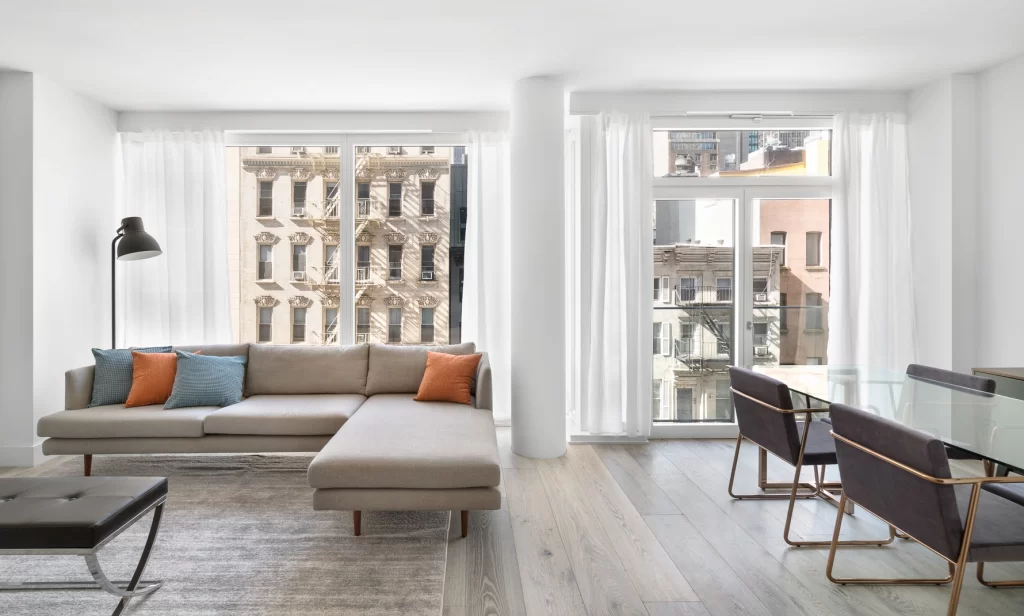
Luxury co-op or condo apartment — For buildings that permit window replacement, aluminum-clad wood brings a warmth to the interior that aluminum-only systems cannot provide. Particularly effective in pre-war apartments with traditional millwork and plaster details.

Historic carriage house conversion — Where the original building had wood windows but the interior renovation is high-end contemporary. Clad wood bridges the gap: authentic exterior, premium interior.

New construction in a historic context — For new buildings adjacent to or within landmark districts where the design intent is to relate to rather than copy the historic fabric. Custom profiles allow the architect to specify exactly the sightlines and proportions the design requires.
FAQ Questions

What is the difference between aluminum-clad wood and solid wood windows?
The core difference is in the exterior construction. A solid wood window is wood on all sides — interior, exterior, and throughout the frame cross-section. An aluminum-clad wood window has the same solid wood structural core and interior finish, but the exterior faces of the frame are covered with a formed aluminum shell that is mechanically bonded or adhered to the wood. From inside the home, both windows look identical: real timber, finished or stained to specification. From outside, the aluminum-clad window presents a smooth aluminum face rather than painted wood.

The practical difference matters in New York City’s climate. Solid wood windows exposed to the exterior require repainting every four to seven years to prevent moisture ingress, swelling, and eventual rot — a significant ongoing maintenance commitment for a brownstone or townhouse with many windows. The aluminum cladding on a clad wood window eliminates this cycle entirely: the exterior aluminum does not absorb moisture, does not require painting, and does not swell or shrink with seasonal temperature changes. The wood interior, protected from weather by the cladding, remains stable and requires only normal interior maintenance.

Both systems offer genuine wood quality on the interior, and both can be specified with TDL or SDL muntins, custom profiles, and a wide range of interior finishes. Aluminum-clad wood is generally recommended for NYC residential projects where exterior maintenance is a concern, while solid wood remains the choice for the highest-end historic restorations where absolute material authenticity is the priority. Open AWD supplies both and can advise which is right for your project during a free consultation.
Can aluminum-clad wood windows pass LPC review in NYC?
Yes. Aluminum-clad wood windows are approved by the New York City Landmarks Preservation Commission in many historic districts, provided the exterior profile geometry — face width, sightline dimensions, and muntin configuration — is compatible with the building’s historic character. The LPC evaluates what a window looks like from the street, not what it is made of on the interior or how the exterior face is constructed. An aluminum-clad wood window with a slim exterior profile and the correct muntin pattern is visually indistinguishable from a painted solid wood window, and the commission treats it accordingly.

For pre-war brownstones and rowhouses — the most common landmark building type in Brooklyn neighborhoods such as Park Slope, Brooklyn Heights, Carroll Gardens, and Prospect Heights — aluminum-clad wood double-hung windows with matching sightlines and TDL or high-quality SDL muntins have a strong track record of LPC approval. The exterior aluminum finish color must be compatible with the building’s historic palette, which in practice means the same colors that painted wood windows would have used: whites, off-whites, dark greens, browns, and blacks are all well-accepted.

Open AWD has supplied aluminum-clad wood systems for LPC-reviewed projects across multiple historic districts in Manhattan and Brooklyn. We prepare shop drawings and material documentation as part of our standard process for landmark submissions and can assess the approval likelihood for your specific building before you commit to a system.
What wood species are available for the interior?
The most commonly available interior wood species for aluminum-clad wood windows are pine, oak, meranti, and Douglas fir — each with different visual characteristics, grain patterns, and finishing properties that suit different interior design approaches.

Pine is the most traditional choice and the most widely used in historic brownstone and rowhouse renovations. It has a relatively fine, even grain, takes paint well, and closely matches the character of original wood windows in pre-war New York buildings. It is also the most cost-effective of the available species. Oak is significantly harder and more durable, with a prominent open grain that reads well under stain or a natural oil finish — a popular choice in contemporary high-end interiors where the wood is meant to be seen rather than painted. Meranti — a tropical hardwood commonly used in European window manufacturing — has a tight, stable grain and a warm reddish-brown tone that stains beautifully. It is among the most dimensionally stable of the available options, which matters in buildings with significant seasonal temperature swings. Douglas fir has an architectural character of its own — a distinctive straight grain with a warm amber tone — and is increasingly specified in gut renovations where the interior design references Pacific Northwest or Scandinavian aesthetics.

Other species may be available on request depending on the manufacturer and order volume. Open AWD carries interior finish samples of the standard species at our Brooklyn showroom, and we recommend reviewing them in person before specifying — the difference between a stained oak and a stained meranti, for example, is significant and best evaluated against your interior materials in natural light.
Does the aluminum exterior look different from painted wood?
When correctly specified, no — from the street, an aluminum-clad wood window is visually indistinguishable from a well-maintained painted wood window. The exterior aluminum cladding is formed to replicate the profile geometry of the wood frame beneath it, presenting a smooth, flat face in the same dimensions as a painted wood sash. The powder coat finish used on the aluminum exterior has a matte or low-sheen surface that reads the same way paint does under natural light, without the reflectivity associated with polished or anodized metal finishes.

The visual equivalence is close enough that the New York City Landmarks Preservation Commission regularly approves aluminum-clad wood windows as replacements for original painted wood windows in historic districts — which is a practical confirmation that the exterior appearance is compatible. Architects and preservation consultants who work regularly with the LPC do not flag aluminum-clad wood as a material concern when the profile and color are correct.

The one context where a difference may be perceptible is at very close range or in raking light — the aluminum surface has a slightly more consistent texture than brushed or hand-painted wood. This is not a concern for street-facing applications where windows are viewed from a normal distance, but it is worth noting for ground-floor windows or entryways where visitors will see the exterior face up close. In those cases, a high-quality paint finish on solid wood may be the more appropriate choice. Open AWD can show you profile samples of both at our Brooklyn showroom so you can evaluate the difference in person before deciding.
How long do aluminum-clad wood windows last?
Aluminum-clad wood windows from reputable European manufacturers typically have a service life of thirty to fifty years or more when correctly installed and given basic periodic maintenance. This is significantly longer than the practical lifespan of unclad painted wood windows in New York City’s climate, which typically require major refurbishment or replacement after twenty to thirty years due to moisture damage, paint failure, and wood deterioration at the sill and frame base.

The longevity of an aluminum-clad wood window depends primarily on three factors: the quality of the aluminum cladding and its junction with the wood at exposed edges; the quality of the glazing seals and hardware, which are the components most likely to require attention over time; and the installation quality, particularly the head flashing, sill pan, and perimeter sealing that protect the frame from water infiltration at the rough opening.

In practice, the aluminum exterior of a clad wood window requires almost no maintenance — the powder coat finish does not need repainting and will not degrade under normal urban exposure conditions. Hardware — hinges, handles, and locking mechanisms — should be lubricated annually and inspected for wear every five to ten years. Glazing seals and gaskets may need replacement after fifteen to twenty years depending on exposure and thermal cycling. The wood interior, protected from weather, needs only the same care as any interior painted or stained wood surface. Open AWD provides a maintenance guide with all window orders.
Can I get different colors on the inside and outside?
Yes — and this is one of the most practical advantages of aluminum-clad wood windows for NYC residential projects. The exterior aluminum face and the interior wood face are independent surfaces that can be finished in entirely different colors without any technical limitation. This is not possible with single-material windows — a solid aluminum or solid wood window that is painted two colors requires field painting and produces a visible color transition at the edge of the frame where the two faces meet.

In aluminum-clad wood windows, the exterior aluminum is powder coated at the factory in any RAL color or custom color match, and the interior wood is primed, painted, stained, or oiled separately — also to any color or finish specification. The two finishes meet at a clean line at the interior edge of the frame, and the transition is part of the designed detail rather than a compromise.

For New York City landmark projects, this dual-color capability is particularly useful. The exterior must match the building’s historic palette — typically a dark or neutral color the LPC accepts — while the interior can be finished in pure white, a warm stain, or any color the interior designer specifies. A common combination in Brooklyn brownstone renovations is an exterior in RAL 9010 off-white or RAL 9005 black, with an interior in bright white paint or a natural oak stain — giving the homeowner complete freedom on both sides without any conflict between the two requirements. Open AWD can provide finish samples for both the exterior aluminum and the interior wood species at our Brooklyn showroom.
Are aluminum-clad wood windows better than solid aluminum for a brownstone?
For most brownstone renovations in New York City — particularly in landmark districts and high-end gut renovations — aluminum-clad wood offers a better result than solid aluminum, primarily because of the interior quality and the depth of customization available. The wood interior of a clad window brings warmth and a quality of finish to the interior of the room that solid aluminum cannot replicate. In a brownstone with original plaster walls, wood floors, and period millwork, aluminum window frames read as a material discontinuity — visually correct from the street but incongruous in the interior context. Wood frames, even when painted, integrate naturally with the historic interior fabric.

From a performance standpoint, thermally broken aluminum and aluminum-clad wood systems are comparable. Both can achieve similar U-factors and acoustic ratings when specified with equivalent glazing packages. Aluminum-clad wood typically has a slight natural thermal advantage because wood itself is a better insulator than aluminum — the wood core adds a layer of thermal resistance that a purely aluminum frame does not have, even with a thermal break.

Solid aluminum is the stronger choice when the priority is maximum sightline slimness, the lowest possible cost at scale, or a purely contemporary aesthetic where the material honestly expressed as aluminum is part of the design intent. For a rear extension in a contemporary style, or a large multi-unit building where consistency and cost efficiency outweigh interior material richness, aluminum is the practical answer. For a single-family brownstone or townhouse where the interior finish matters and the budget supports it, aluminum-clad wood is generally the better choice. Open AWD supplies both and can give you a direct cost and specification comparison for your specific project.
What is the lead time for custom aluminum-clad wood windows in NYC?
Custom aluminum-clad wood windows typically require eight to fourteen weeks from confirmed shop drawings to delivery in New York City. This places them between aluminum systems — which are generally faster at six to ten weeks — and steel systems, which take longer at twelve to twenty weeks. The exact lead time depends on the manufacturer’s current production schedule, the complexity of the profiles specified, and the number of windows in the order.

The fabrication lead time does not include the time required for shop drawing preparation and approval, which typically adds two to four weeks at the start of the process. For landmark projects that require LPC review before fabrication can begin, the total timeline from first consultation to delivery-ready windows is typically five to seven months, depending on whether a Staff-Level approval or a full Certificate of Appropriateness hearing is required.

For brownstone and townhouse renovation projects, the window order should be placed as early as possible in the project schedule — ideally at the time the construction contract is signed, not after demolition begins. Custom windows are frequently on the critical path of a renovation timeline: delays in window delivery hold up waterproofing, plastering, and interior finishing, which in turn delays the entire project. Open AWD provides a written lead time estimate at the time of quotation and confirms the production schedule at order placement. We provide regular production updates and coordinate delivery timing with your general contractor.

See the Profiles Before You Decide — Visit Our Brooklyn Showroom

Choosing between wood species, interior stain colors, and exterior aluminum finishes is much easier when you can hold the samples in your hands. Our Brooklyn showroom carries full-size profile samples of our aluminum-clad wood systems, including multiple wood species, interior and exterior finish options, and hardware choices — all in one place.
Bring your architect, your interior designer, or just your instincts. Consultations are free and there is no obligation. We are located in Red Hook, Brooklyn, and available by appointment Monday through Saturday.
Call Now