HISTORIC REPLACEMENT WINDOWS AND DOORS BROOKLYN

Limited-time 10% discount
on your first project

Trusted local window experts serving you since 2008
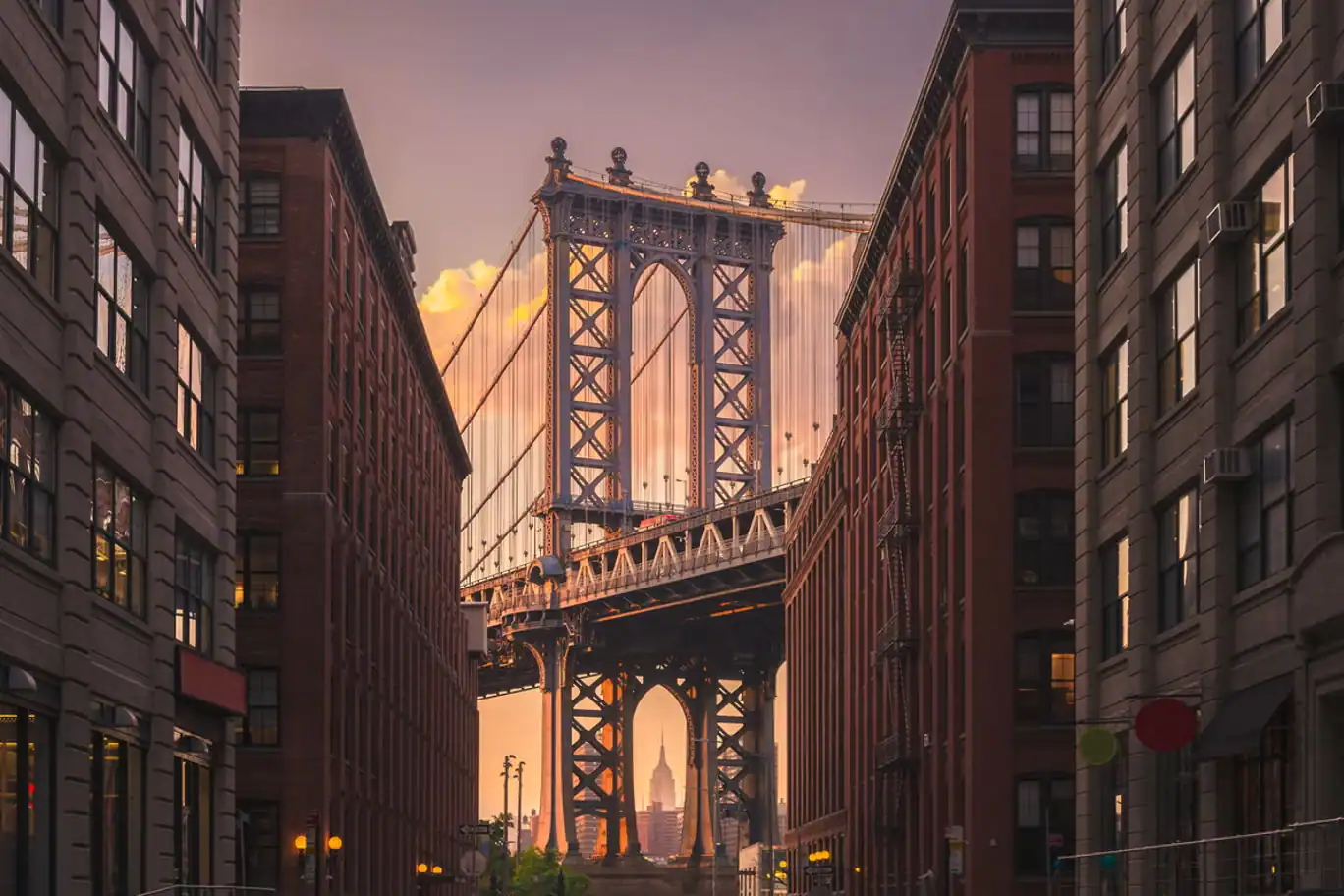
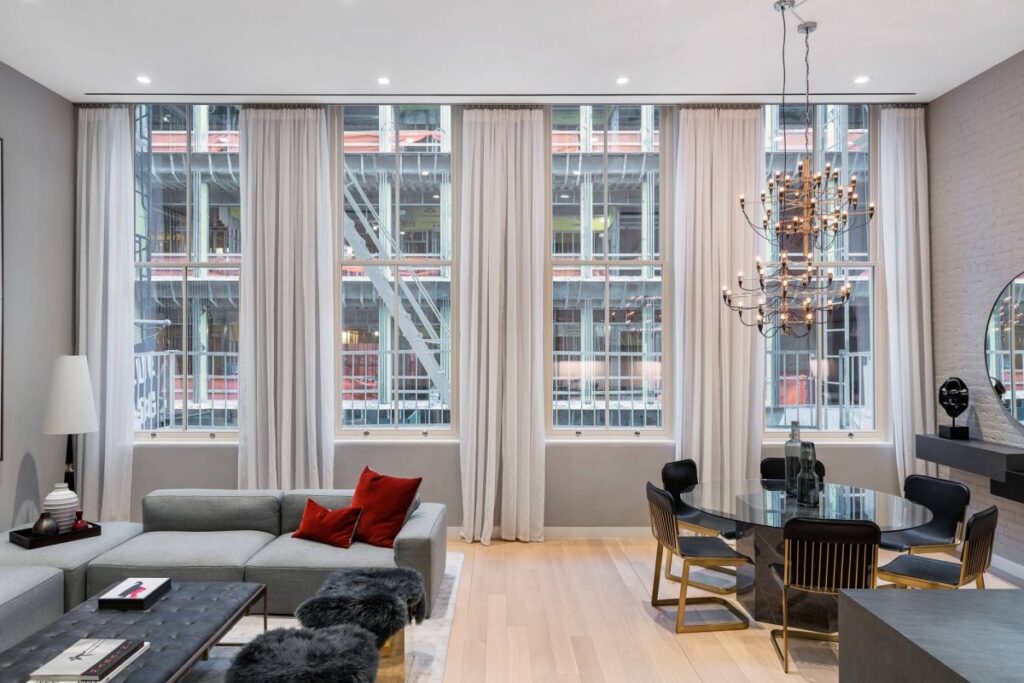
Replacing windows in a pre-war brownstone, rowhouse, or historic apartment building is not the same as a standard window replacement. The profiles, materials, sightline widths, and muntin configurations all matter — both for the look of your building and, if you're in a landmark district, for LPC compliance. Open AWD specializes in historic window replacement across New York City. We supply custom wood, steel, bronze, and aluminum systems designed to match the original character of pre-war and historic buildings — with modern thermal, acoustic, and energy performance built in.
- Serving NYC since 2008
- LPC landmark projects and non-landmark restorations
- Wood · Steel · Bronze · Aluminum — all materials
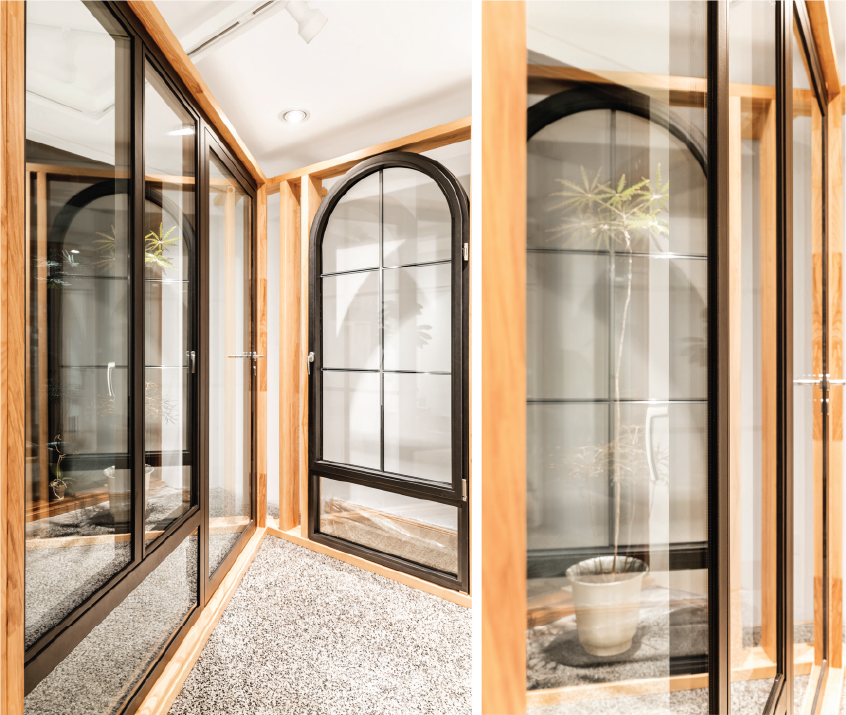
- Brooklyn showroom — samples available by appointment

Limited-time 10% discount
on your first project

Trusted local window experts serving you since 2008

Why Standard Window Replacement Doesn't Work for Historic Buildings

Most replacement window products are designed for new construction — standard sizes, thick frames, and wide sightlines that prioritize thermal efficiency over visual proportion. In a pre-war brownstone or rowhouse, those windows look wrong immediately. The frame is too chunky, the glass ratio is off, and the building loses the character that makes it valuable.
Historic window replacement requires matching the original profile geometry — the width of the frame, the sightline between panes, the size and pattern of the muntins, and the depth of the reveal. It also requires choosing a material that behaves correctly over time in New York's climate and that, where applicable, satisfies the Landmarks Preservation Commission's requirements.
Open AWD works exclusively with custom and semi-custom window systems that can be specified to match existing profiles. We do not sell off-the-shelf replacement windows.
What Type of Building Are You Working With?

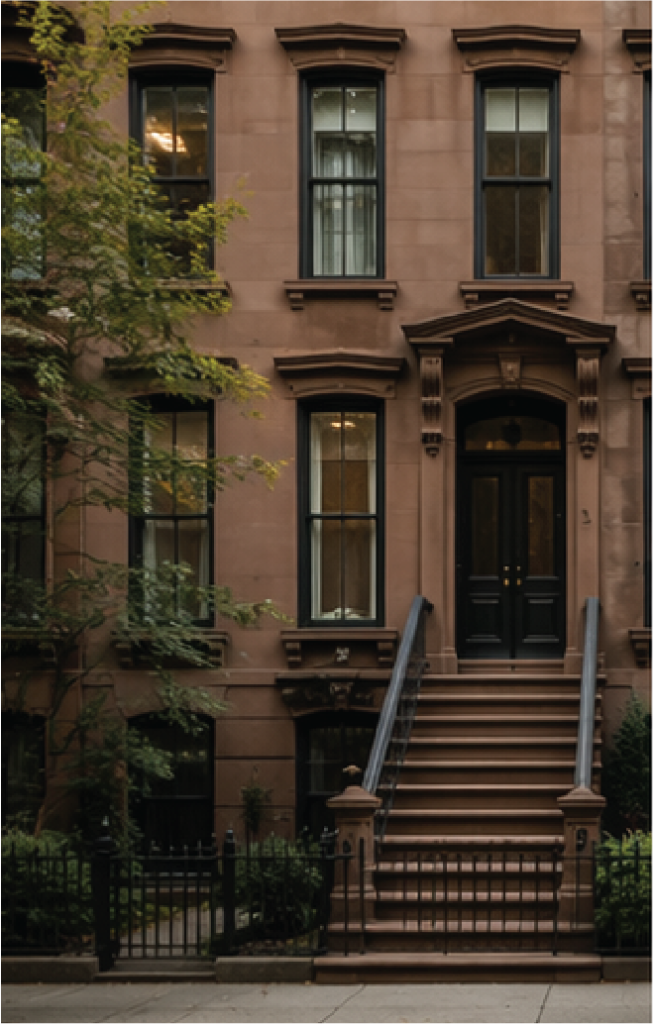
brownstone rowhouse
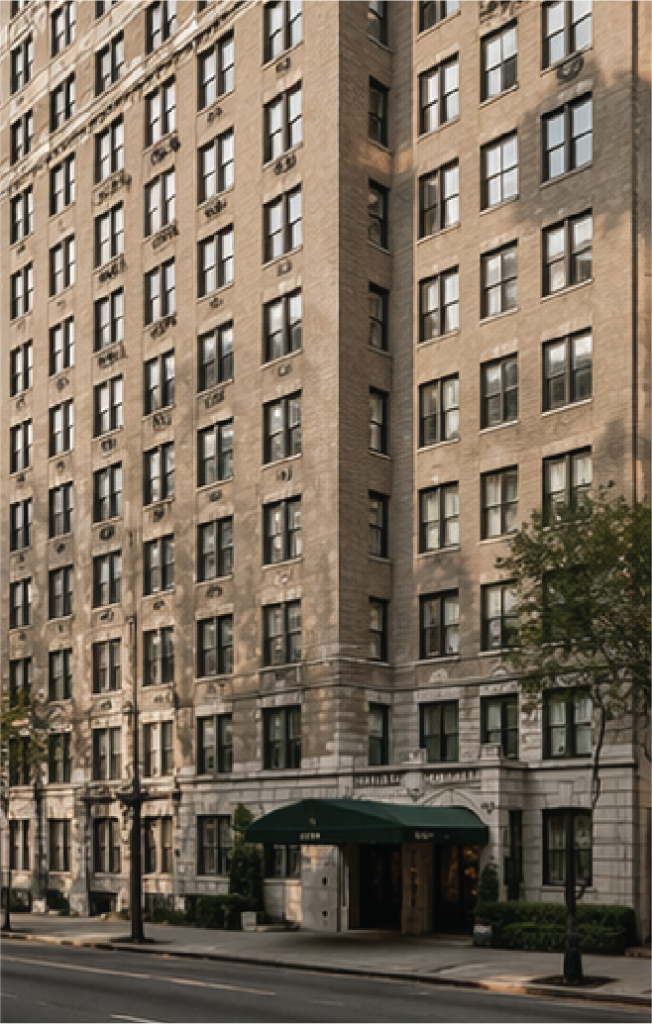
Pre-war co-op or apartment building
townhouse
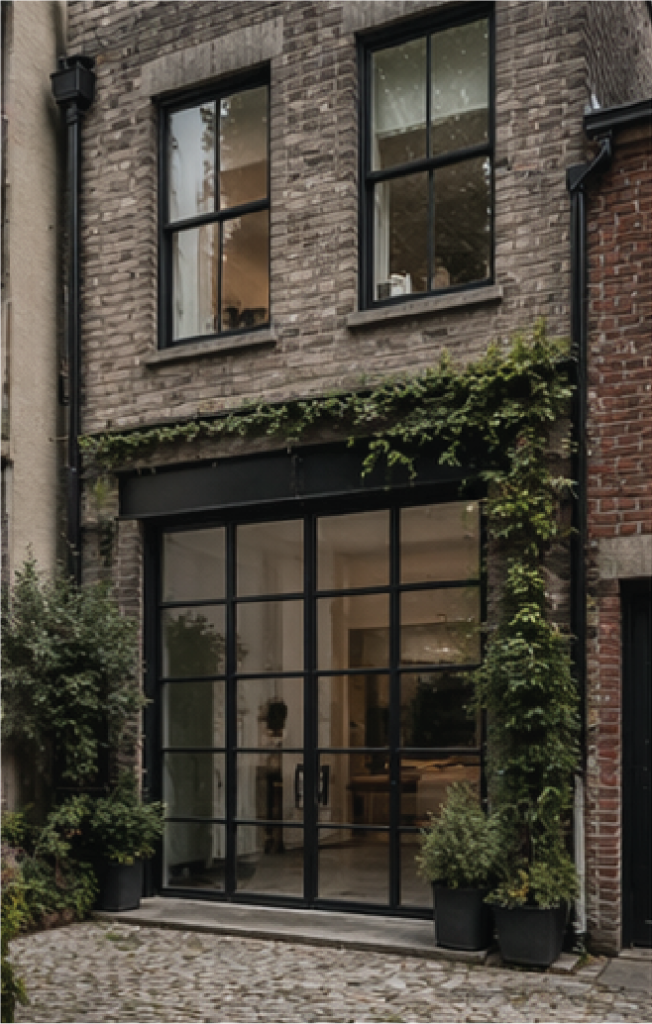
carriage house or mews building

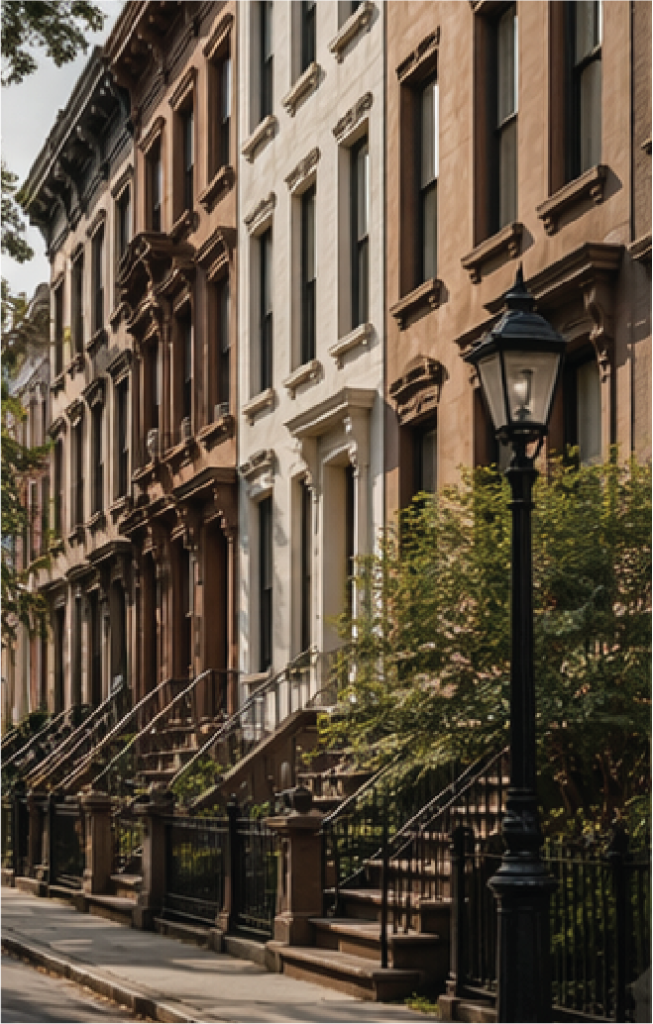
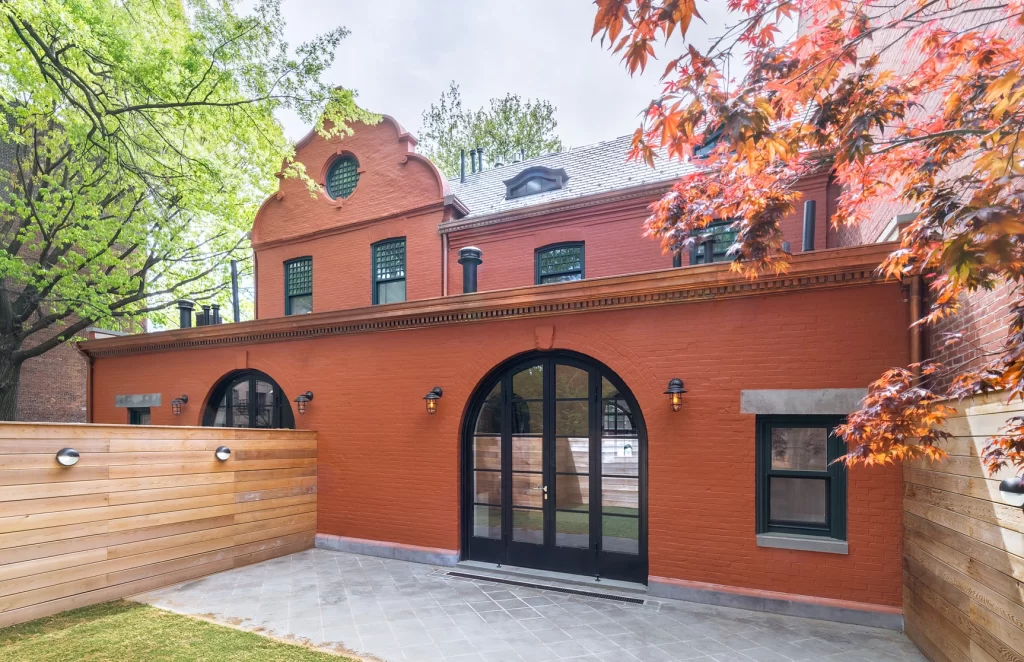
Brownstone rowhouse — Original windows were typically wood double-hung. Best match: custom wood or aluminum-clad wood with matching sightlines and muntin pattern.

Pre-war co-op or apartment building — Often steel or aluminum casements. Replacement options: thermally broken aluminum or slim steel with matching face widths.

Townhouse (Manhattan / Brooklyn) — Varies by era. Steel pivot, steel casement, or wooden double-hung. We assess the originaloriginal profile and recommend the closest modern equivalent.

Carriage house or mews building — Often original steel or wood. Steel replacement systems with slim sightlines are typically the best match.Landmark or historic district building — All of the above apply, plus LPC compliance is required. → See our Landmark Windows page.

Why Front and Rear Elevation Differ

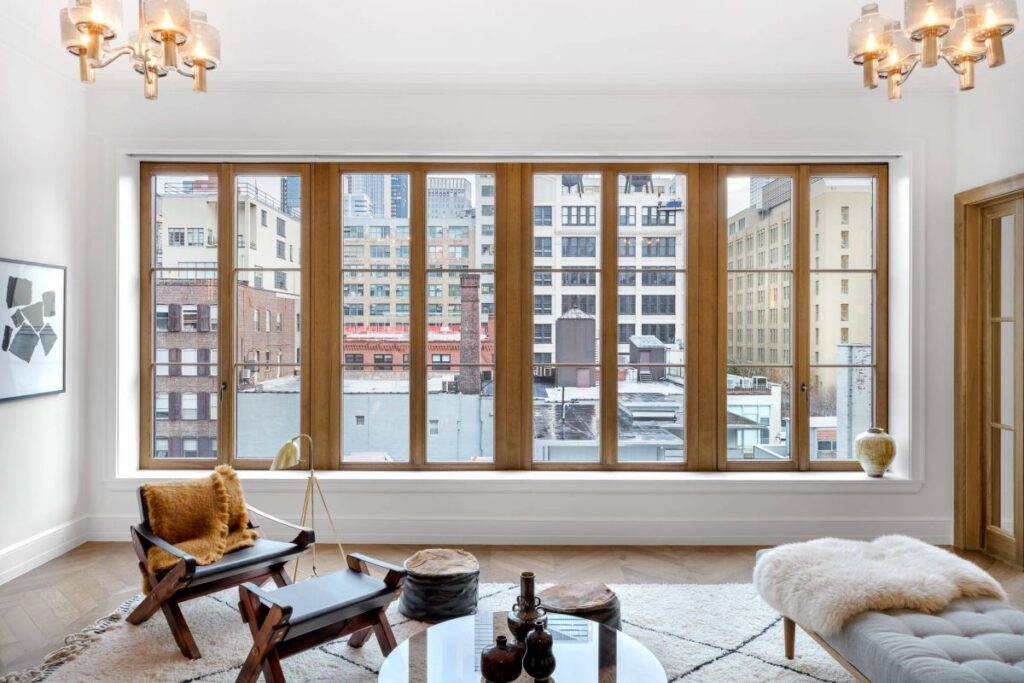
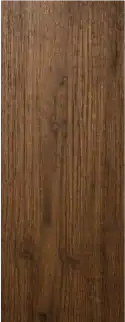
Wood

Best for brownstones and rowhouses

Authentic historic look

Available aluminum or bronze clad

LPC: widely accepted

Requires painting/maintenance
Steel

Slimmest sightlines

Best for lofts and townhouses

Matches original steel profiles

LPC: preferred for steel originals

Higher cost, less maintenance

Bronze

Premium historic material

Ages naturally over time

Matches original bronze elements

LPC: appropriate for Beaux-Arts

Highest cost, longest lifespan

Aluminum

Thermally broken options

Low maintenance

Slim profiles available

LPC: accepted in many districts

Best value for large projects

Historic Replacement vs Standard Replacement — What’s the Difference?

StandardHistoric match
Sightline width3–4 inches1–2 inches
Frame profilefixed sizescustom-specified to original
Muntin styleSDL snap-intrue divided light (TDL) or SDL with correct geometry
Glassclear double panedouble or triple IGU with period-appropriate glass option
LPC compatibilityusually fails reviewdesigned to pass
Material optionsvinyl or aluminumwood, steel, bronze, aluminum

How We Approach Historic Window Replacement

  1. Site review or consultation — We assess your existing windows: profile dimensions, material, glazing type, and condition. This can be done in person at our Brooklyn showroom or on-site.
  2. Profile matching — We identify which of our systems most closely replicates your original window geometry — sightline width, frame depth, muntin pattern, and reveal.
  3. Sample review — We provide physical profile samples and glass samples so you can evaluate the match before ordering.
  4. Specification and drawing — We prepare technical specifications and shop drawings for your approval, and where needed, for your architect or GC to review.
  5. Supply and coordination — We manage procurement, delivery scheduling, and quality control. We work with your installer or can recommend certified installers we have worked with in NYC.

FAQ Questions

How do I match the profile of my original windows?

Matching an original window profile requires measuring four key dimensions: the face width of the frame (the visible width of the material from the exterior), the sightline between panes, the depth of the frame from face to back, and the size and spacing of the muntins if the window is divided. In most cases, a detailed photograph combined with physical measurements taken on-site is enough to identify a close match.

For pre-war brownstones in Brooklyn, the original windows were typically wooded double-hung windows with relatively narrow sightlines — usually between 1.5 and 2.5 inches depending on the era and the building’s style. For early twentieth century buildings with steel casements, the original sightlines are often significantly slimmer, sometimes under 1 inch.

Open AWD’s process for profile matching starts with a consultation — in person at our Brooklyn showroom or on-site. We measure your existing windows, photograph the profiles, and then identify which of our systems most closely replicates the original geometry. We provide physical profile samples so you can compare them against your existing windows before committing to an order. For landmark projects, we also prepare shop drawings that document the profile match for the LPC submission.

Can I replace my brownstone windows without LPC approval?

It depends on whether your brownstone is located within a New York City Historic District or is individually landmarked. If it is, then yes — you are required to obtain approval from the Landmarks Preservation Commission before replacing any windows visible from the street, regardless of whether you own the building outright or are replacing like-for-like.

If your brownstone is not in a landmark district and is not individually landmarked, you do not need LPC approval. You may still need a standard DOB permit depending on the scope of work, but the LPC review process does not apply to non-landmarked properties.

The quickest way to confirm your building’s status is to search your address on the NYC LPC website at nyc.gov/landmarks, or to check the Zola map (zola.planning.nyc.gov), which shows historic district boundaries clearly. If you are unsure, Open AWD verifies landmark status for all clients as part of a free initial consultation — just provide your building address and we will confirm within one business day.

How do I match the profile of my original windows?

Matching an original window profile requires measuring four key dimensions: the face width of the frame (the visible width of the material from the exterior), the sightline between panes, the depth of the frame from face to back, and the size and spacing of the muntins if the window is divided. In most cases, a detailed photograph combined with physical measurements taken on-site is enough to identify a close match.

For pre-war brownstones and rowhouses in Brooklyn, the original windows were typically wood double-hung with relatively narrow sightlines — usually between 1.5 and 2.5 inches depending on the era and the building’s style. For early twentieth century buildings with steel casements, the original sightlines are often significantly slimmer, sometimes under 1 inch.

Open AWD’s process for profile matching starts with a consultation — in person at our Brooklyn showroom or on-site. We measure your existing windows, photograph the profiles, and then identify which of our systems most closely replicates the original geometry. We provide physical profile samples so you can compare them against your existing windows before committing to an order. For landmark projects, we also prepare shop drawings that document the profile match for the LPC submission.

Can wood windows be aluminum-clad and still look historic?

Yes. Aluminum-clad wood windows have a wood interior and an aluminum exterior cladding that protects the wood from weather exposure. When specified correctly — with the right profile geometry, sightline width, and finish color — aluminum-clad wood windows are visually indistinguishable from painted wood windows when viewed from the street. The exterior face presents as a flat, painted aluminum surface that closely matches the appearance of traditional wood windows.

For historic buildings in New York City, aluminum-clad wood windows offer a practical advantage: the exterior aluminum requires no painting and resists the weathering, swelling, and moisture damage that affects unclad wood in NYC’s climate. The interior remains real wood, which many homeowners prefer for aesthetic and thermal reasons.

The Landmarks Preservation Commission generally accepts aluminum-clad wood windows provided the exterior profile and color match the historic character of the building. The cladding profile must replicate the original wood sightlines — a chunky aluminum-clad window with wide frame faces will not pass LPC review even if the core is wood. Open AWD supplies aluminum-clad wood systems with slim exterior profiles specifically suited to pre-war brownstones and rowhouses in NYC landmark districts.

What is the best window material for a Brooklyn brownstone?

For most Brooklyn brownstones, the most historically appropriate and widely accepted material is wood — either solid wood or aluminum-clad wood. Brownstones built between the 1870s and 1940s were almost universally fitted with wood double-hung windows, and replacing them with wood systems that replicate the original profile is the approach most likely to satisfy the Landmarks Preservation Commission and preserve the character of the building.

Aluminum-clad wood is often the most practical choice for brownstone owners who want the authentic appearance of wood without the maintenance demands. The exterior aluminum cladding eliminates repainting and resists NYC’s humid and variable climate, while the wood interior provides good thermal performance and a traditional finish.

Solid wood windows remain the most authentic option for high-end restorations or for buildings where the interior finish is a priority. They require more maintenance but offer the closest match to original construction.

Aluminum windows — thermally broken, with slim profiles — are a viable alternative for brownstone owners who prioritize low maintenance and energy performance over strict material authenticity. They are accepted by the LPC in many districts when the profile geometry is correct. Steel is less common in brownstones but may be appropriate if the original windows were steel or if the project involves a high-end renovation where slim sightlines are a design priority. Open AWD can advise on the right material for your specific building during a free consultation.

How do I know if my building is in a landmark district?

There are three ways to check whether your building is in a New York City landmark district. The most straightforward is to search your address directly on the NYC Landmarks Preservation Commission website at nyc.gov/landmarks, which has a searchable map of all designated historic districts and individually landmarked buildings across the five boroughs.

A second option is to use NYC’s Zola planning map at zola.planning.nyc.gov, which clearly shows historic district boundaries as an overlay on the street map. This is particularly useful for understanding whether your building falls within a district boundary when it is close to the edge of a designated area.

You can also call or email the LPC directly — their staff can confirm designation status for any address. In Brooklyn, a large number of brownstone neighborhoods are fully or partially within historic districts, including Park Slope, Brooklyn Heights, Carroll Gardens, Cobble Hill, Boerum Hill, Fort Greene, Clinton Hill, Prospect Heights, and Crown Heights North, among others.

If you are planning a window replacement and are unsure of your building’s status, Open AWD verifies landmark status for all clients as part of a free initial consultation. Provide us your building address and we will confirm whether LPC approval is required before you proceed with any plans.

Do historic-style replacement windows meet NYC energy codes?

Yes. Custom historic-style replacement windows can be designed to meet the New York City Energy Conservation Code (NYCECC), which is based on the ASHRAE 90.1 standard. The code sets requirements for thermal performance — primarily the U-factor and Solar Heat Gain Coefficient (SHGC) — not for the visual appearance or profile of the window. This means a window can look historic and still achieve the required energy performance.

Most modern wood, aluminum-clad wood, thermally broken aluminum, and thermally broken steel systems are available with insulated glass units (IGU) that meet or exceed NYC energy code requirements for residential and commercial buildings. Thermally broken frames — where the interior and exterior faces of the frame are separated by an insulating material — significantly improve energy performance compared to single-material frames and are standard in current production for aluminum and steel systems.

For landmark buildings, there is a specific provision in the NYC energy code that provides some flexibility when full compliance would be inconsistent with the historic character of the building. This does not exempt landmark buildings from energy requirements entirely, but it allows for alternative compliance paths in cases where standard solutions would require visible changes that the LPC would not approve.

Open AWD specifies all window systems with thermal performance data and can confirm code compliance for your specific project as part of the specification process.

How long does custom window fabrication take?

Lead times for custom window fabrication depend on the material, the complexity of the profiles, and the current production schedule of the manufacturer. As a general guide: aluminum systems typically have the shortest lead times, ranging from six to ten weeks from confirmed order to delivery. Wood and aluminum-clad wood systems generally take eight to fourteen weeks. Steel and bronze systems — which involve more specialized fabrication — typically require twelve to twenty weeks, and can take longer for highly customized profiles or large orders.

These timelines are for fabrication only and do not include the time required for shop drawing preparation and approval, which typically adds two to four weeks at the start of the process. For landmark projects that require LPC review, the approval timeline adds further — anywhere from two weeks for a straightforward Staff-Level approval to several months for a full Certificate of Appropriateness review.

For planning purposes, it is advisable to begin the specification and ordering process as early as possible in a renovation project. Custom windows are typically on the critical path of any renovation timeline — delays in window delivery can hold up finishing work, plastering, and interior fit-out. Open AWD provides written lead time estimates at the time of order confirmation, and we keep clients updated on production status throughout the fabrication period.

See the Profiles Before You Decide — Visit Our Brooklyn Showroom

Choosing the right window for a historic building is easier when you can see and touch the profiles in person. Our showroom in Red Hook, Brooklyn carries profile samples, glass samples, and hardware examples across all the materials we supply. Bring photos of your existing windows and your building address — we'll advise on material, profile matching, and landmark requirements on the spot.
Call Now